

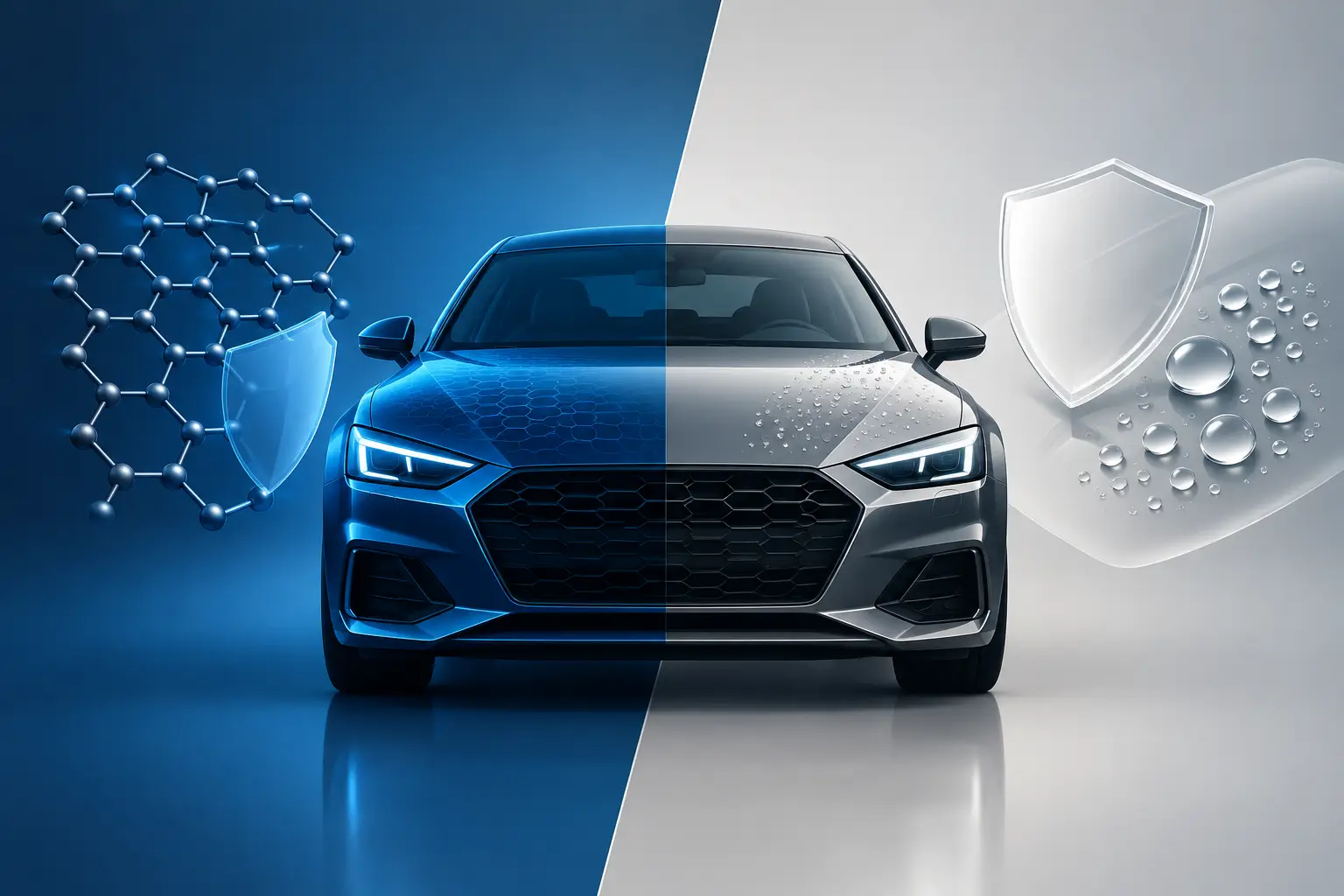
Phoenix dust has a way of finding every clean panel, often before you make it home from the car wash. Add baked-on bugs, road film, hard-water spots, and intense sun, and keeping a vehicle looking good takes more than a quick rinse. That is why graphene versus ceramic protection is a useful question for local drivers. Both can improve shine and help grime release more easily, but they are not identical products or promises.
The best choice depends on what kind of protection you are comparing, how you use your vehicle, and what you expect from a wash visit. For most everyday drivers, the goal is simple: get the car actually clean, make it look better, and make the next wash easier.
Graphene Versus Ceramic Protection at a Car Wash
Ceramic protection usually relies on silicon dioxide, often called SiO2. It creates a slick, water-repelling layer that boosts gloss and helps contaminants sit on top of the paint rather than bond as quickly. You may see ceramic protection offered as a quick wash add-on, a spray sealant, or a professionally installed coating. Those are very different levels of service, even when they share the word “ceramic.”
Graphene protection is a newer chemistry often blended with polymers and other protective ingredients. Graphene is known for strength and conductivity, but in car wash products, the benefit is not a sheet of pure graphene bonded to your paint. It is a formulated protectant designed to enhance gloss, water behavior, and surface slickness after a wash.
At an express wash, both graphene and ceramic treatments are maintenance products. They can help protect a clean vehicle and improve its finish, but they are not a substitute for paint correction or a multi-year professional coating applied by hand. That distinction matters. Honest protection starts with clear expectations.
What Each One Does Well
Ceramic-based protectants have earned their popularity for good reason. A quality ceramic wash treatment can add noticeable shine and water beading. When dust, splatter, or light road grime hits the vehicle later, a protected surface can be easier to wash clean again. It is a solid option for drivers who want a glossy finish and familiar protection chemistry.
Graphene protection aims for many of the same benefits, with a few practical advantages that can appeal in Phoenix. The finish can look rich and slick, helping water move across the paint and reducing how strongly dirt seems to cling between washes. It may also be less likely to show certain water-spot issues than some ceramic formulas, depending on the product and how the vehicle is maintained.
Neither treatment makes a vehicle immune to dirt. Desert dust will still land. Bugs will still hit the front bumper. A week of construction-zone driving will still leave road film behind. Protection changes the cleanup, not the fact that your car is used every day.
Shine and appearance
If you like the sharp, glossy look after a wash, both options can deliver it. Ceramic formulas often produce a crisp, glass-like shine. Graphene treatments can provide a deep, smooth look that many drivers find especially noticeable on dark paint.
The difference will not always be dramatic from ten feet away. Paint condition, wash quality, sunlight, and how dirty the vehicle was before it entered the tunnel all play a role. A good wash process matters before any protectant is applied.
Water behavior and easier cleanup
Water beading is the feature most people notice first. Ceramic protection is well known for creating beads that roll across the surface. Graphene protection can also repel water and help it sheet away, depending on the formula.
Beading looks great, but it is not the whole story. In Phoenix, water that dries on the paint can leave minerals behind. The better habit is to avoid letting sprinkler water or wash water bake onto the vehicle whenever possible. A protection product can help, but it cannot erase mineral deposits after they have dried in the sun.
Everyday durability
Durability is where marketing can get confusing. A professionally installed ceramic coating may last years with proper prep and maintenance. A ceramic protectant applied during a regular wash will last far less time. The same is true of graphene treatments at an express wash.
For a car that sees daily commuting, school drop-offs, freeway miles, parking lots, and summer heat, regular reapplication is more realistic than expecting one visit to handle the whole year. That is not a weakness. It is a practical maintenance approach that fits how most people use their cars.
Why Graphene Can Make Sense in Phoenix
North Phoenix drivers do not need a science lesson every time they wash their car. They need protection that fits real conditions: sun, fine dust, bugs on the grille, and grime that builds up fast on wheels and lower panels.
Graphene protection is a strong fit because it supports a clean, slick finish without turning a wash visit into a complicated project. After the vehicle has been properly cleaned, it adds another layer of help against the stuff that makes a car look dull between washes. It is especially useful for drivers who wash regularly and want their paint to stay brighter and easier to maintain.
At Bubble Express Car Wash, graphene protection is part of a better wash process, not a magic claim. Rich soaps, deliberate prep, capable tunnel equipment, and quality finishing tools do the work of getting your vehicle clean. The protectant helps maintain that result after you leave.
When Ceramic Protection May Be the Better Choice
Ceramic protection still makes sense for plenty of vehicles. If you already have a professionally applied ceramic coating, regular wash-safe ceramic maintenance products may support that coating. If you prefer the look and behavior of a ceramic formula, it can be a good choice for routine protection.
It can also be the better conversation to have with a detailer when your vehicle needs more than wash protection. Maybe the paint has oxidation, swirl marks, or etched water spots. Maybe you own a newer vehicle and want a long-term coating after paint correction. In those cases, a professionally installed ceramic coating may be worth considering.
Just do not confuse a professional coating package with an express-wash protectant. One involves extensive preparation, controlled application, and curing time. The other is built for speed, convenience, and regular maintenance. Both have a place, but they solve different problems.
The Protection Choice Most Drivers Actually Need
For many Phoenix families and commuters, graphene versus ceramic protection comes down to consistency, not a laboratory comparison. The product that helps your car stay cleaner-looking and encourages you to wash it often is usually the better value.
A vehicle that gets regular washes has less time for dust, bug residue, bird droppings, and road film to sit on the finish. Frequent cleaning is particularly helpful in the desert, where heat can make contaminants harder to remove once they bake on. Adding a protectant during those regular washes gives the paint an extra assist without adding another errand to your week.
If your vehicle is a daily driver, choose the wash package that matches how you care for it. If you wash often, graphene protection can be an easy, practical upgrade. If you are planning a professional detail and want long-term coating performance, talk with a qualified detailer about ceramic options and the prep required.
Get More From Any Protective Finish
No matter which chemistry is on the vehicle, a few habits make a real difference. Wash off bugs promptly when you can, especially after highway trips. Do not let sprinkler water repeatedly dry on the same panels. Use clean towels for touch-ups rather than rubbing dust with a dry, dirty rag. Keep the interior and floor mats under control too, because a clean exterior feels even better when the whole vehicle is ready for the week.
A good protection product should make car care feel easier, not more complicated. Pick the option that gives your vehicle a clean shine, fits your routine, and helps you spend less time worrying about the next layer of Phoenix dust.