

Phoenix dust has a way of finding the lowest point in your car. Add kids, work boots, coffee runs, and monsoon-season mud, and your floor mats can look rough long before the rest of the interior does. Knowing how to clean car floor mats properly keeps dirt from getting ground into the carpet, helps your cabin smell fresher, and makes the whole car look better after a wash.
The good news: you do not need a shelf full of specialty products. The right method depends on whether you have carpet mats, rubber mats, or all-weather liners. Start by taking them out of the vehicle. Cleaning them in place makes it harder to remove dirt and can leave moisture trapped in your carpet.
How to Clean Car Floor Mats by Material
Before you grab a hose or cleaner, check what your mats are made of. Carpet mats need a lighter touch and more drying time. Rubber and vinyl mats can handle water, brushing, and a stronger rinse. Treating every mat the same is one of the easiest ways to leave behind stains, soap residue, or a musty smell.
Cleaning carpet floor mats
Carpet mats collect fine dust deep in the fibers, especially in North Phoenix where dry debris gets tracked in every day. Begin by shaking each mat outside, then vacuum both sides. Do not skip the back – loose sand and grit can work their way through and land back on your vehicle’s carpet.
Once the loose dirt is gone, spray a carpet-safe upholstery cleaner lightly across the mat. You want enough product to lift grime, not enough to soak the padding underneath. Use a stiff nylon brush to work the cleaner into high-traffic areas, especially under the pedals and along the driver’s heel rest.
Let the cleaner sit according to its directions, usually a few minutes. Then blot the area with a clean microfiber towel or use a wet/dry vacuum to pull out the moisture and dirty solution. If you do not have an extractor, a second clean towel and a little patience will still get the job done.
For a stubborn stain, repeat the spot-cleaning step instead of flooding the entire mat. Grease, soda, makeup, and pet accidents all respond differently, so more water is not always the answer. If a stain has been sitting through several hot Phoenix days, it may take two or three light treatments.
The final step matters most: let carpet mats dry completely before putting them back. Hang them over a railing, lay them in direct sunlight for a short time, or use air flow from a fan. A mat that feels dry on top can still be damp underneath, and reinstalling it too soon can create odor or mildew inside the vehicle.
Cleaning rubber and all-weather mats
Rubber mats and molded liners are built for messy shoes, but their grooves hold onto dirt like a storage bin. Start by removing the mat and knocking it against a hard surface to release dry debris. Vacuuming first can also help if the mat is packed with sand, leaves, or small rocks.
Rinse the mat with water, then apply a mild soap or an interior-safe cleaner. Scrub the channels, raised edges, and heel pad with a medium-bristle brush. Pay attention to the corners where wet dirt tends to collect.
Rinse until the water runs clear and there are no slick soap spots left behind. Dry with a microfiber towel or let the mat air-dry in the shade. Avoid heavy tire shine, silicone dressing, or oily protectants on the driver-side mat. They can leave a slippery surface under your pedals, which is not worth the extra shine.
If you want a finished look, use a water-based mat protectant labeled safe for interior rubber or vinyl. It should leave a clean, natural appearance instead of a glossy coating that attracts more dust.
A Fast Routine for Everyday Dirt
You do not need a full deep clean every week. For most drivers, a quick mat reset during a regular car wash keeps buildup manageable. Pull the mats out, shake off loose debris, vacuum the carpet underneath, and use an air gun to blow dust out of tight edges and seat tracks.
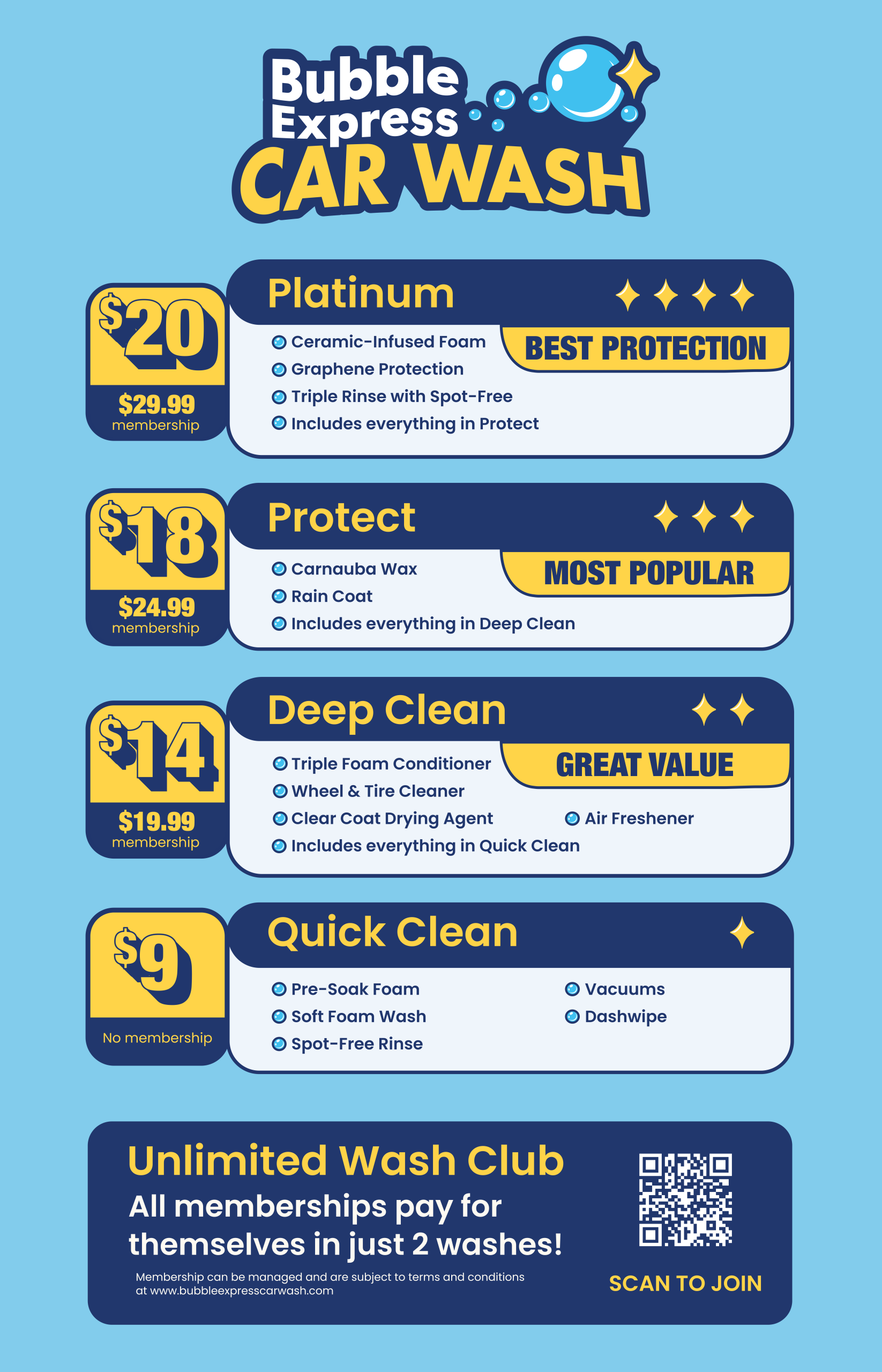
At Bubble Express Car Wash, the mat holders, stronger vacuums, air guns, towels, and spray bottles make this part easier to handle in one stop. The goal is simple: remove the dirt before it gets rubbed deeper into your vehicle every time someone climbs in.
A quick routine is especially useful if you commute daily, carry kids to school or sports, bring a dog along, or park near dusty construction areas. Five extra minutes now can save you from a much bigger interior cleanup later.
What to Use and What to Skip
The simplest supplies usually work best. Keep a small kit at home with a vacuum, microfiber towels, a soft or medium nylon brush, carpet cleaner, and mild soap for rubber mats. A wet/dry vacuum is helpful for carpet mats, but it is not required for basic maintenance.
Avoid using household bleach, harsh degreasers, or laundry detergent on your mats. Bleach can discolor carpet and damage rubber. Strong degreasers may dry out vinyl or leave a residue. Laundry soap is difficult to rinse completely, which can leave carpet stiff and attract more dirt.
Be careful with pressure washers, too. They work well on durable rubber liners when used at a reasonable distance. They are less ideal for carpet mats because high pressure can force water deep into the backing and make drying take much longer.
If your carpet mats are faded, worn through, or holding an odor that returns after cleaning, replacement may be the better value. Cleaning can improve a lot, but it cannot rebuild worn fibers or remove every trace of years of spills.
Don’t Forget the Carpet Under the Mats
Floor mats do their job by catching the mess, but dirt does not always stay on top of them. Fine desert dust slips around the edges, while spilled drinks can seep beneath carpet mats. Once the mats are out, vacuum the vehicle’s floor thoroughly, including the edges under the seats and near the door sill.
For a small stain in the vehicle carpet, use the same light spray-and-blot method as you would on a carpet mat. Do not saturate the floor. Your vehicle’s interior carpet and padding can take much longer to dry than a removable mat.
Check under the driver-side mat before reinstalling it. Make sure nothing is interfering with the accelerator, brake, or clutch pedal. The mat should sit flat and lock into its factory retention hooks if your vehicle has them. A clean mat is good. A clean mat that stays securely in place is better.
How Often Should You Clean Your Floor Mats?
It depends on how you use your car. A solo commuter with rubber mats may only need a thorough wash once a month. A family SUV, work truck, or vehicle that sees hiking trails, pets, and takeout runs may need attention every week or two.
For Phoenix drivers, dust is the constant. Even when your mats do not look muddy, fine grit can build up in carpet fibers and along rubber grooves. Shake and vacuum regularly, then deep-clean when the mats look dull, feel gritty, or start affecting the way the interior smells.
The best cleaning routine is the one you will actually keep up with. Remove the mats, get the loose dirt out first, use the cleaner that matches the material, and give everything enough time to dry. Your car will feel cleaner from the ground up, even before you turn the key.